Introduction
Hoi An Ancient Town is small enough to walk in an afternoon and dense enough to misunderstand for a week. The yellow walls photograph beautifully without explanation — but the explanation is what turns a pretty stroll into a trip you remember.
A local guide does not replace your own wandering. They give you a foundation: why the houses are ochre, why the Japanese Covered Bridge sits where it does, which market stall is worth your morning, and how to walk respectfully through living neighbourhoods.
A UNESCO town needs more than a map pin
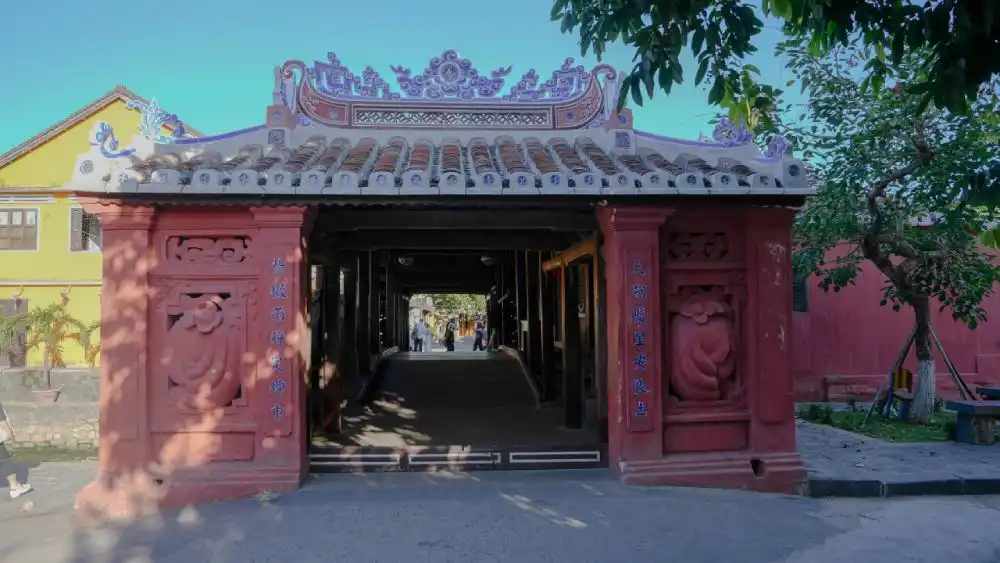
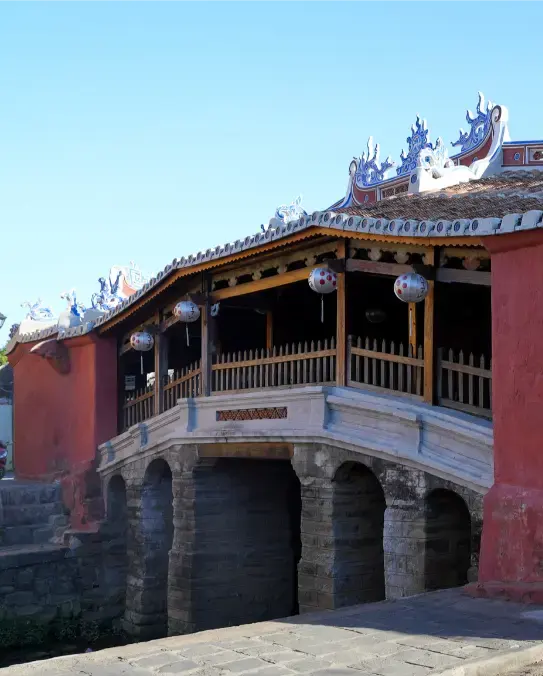
Hoi An's World Heritage status reflects centuries of trade, migration, and architecture blending Vietnamese, Chinese, Japanese, and European influences. A map lists the Japanese Covered Bridge; a guide explains why merchants funded it, how floods reshaped the riverfront, and which details restoration preserved.
Without context, many visitors repeat the same three facades and miss assembly halls, merchant interiors, and market rhythms that define daily life. Read our Ancient Town story for depth — then walk it with someone who connects pages to pavement.
Stories, not scripts
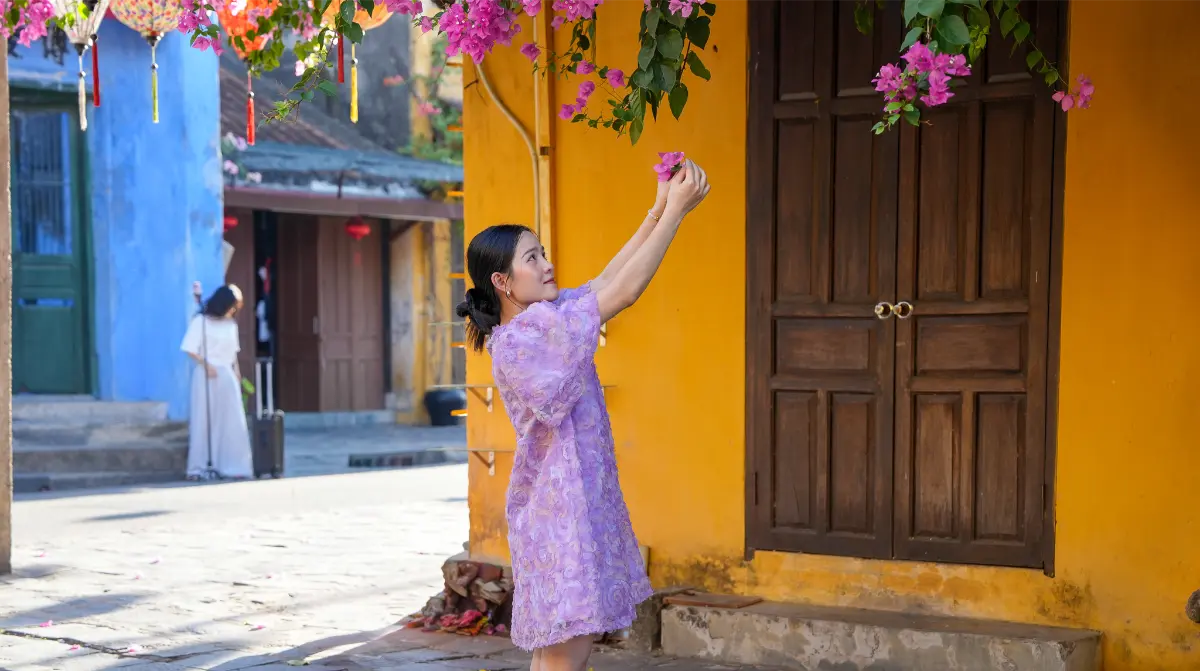
Good guiding sounds conversational because it is responsive. When a guest asks about ao dai photos, flood seasons, or vegetarian food, the route bends slightly — a shorter market detour, a quieter lane, a recommendation that fits that person.
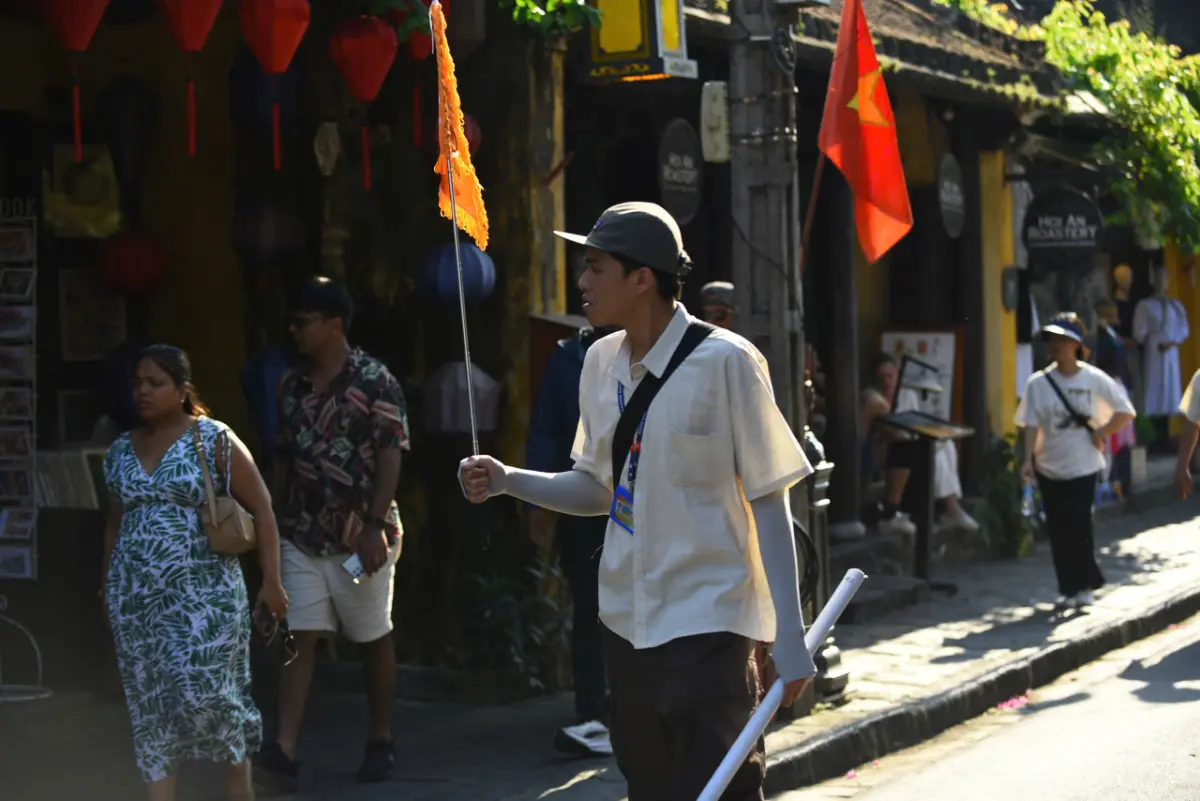
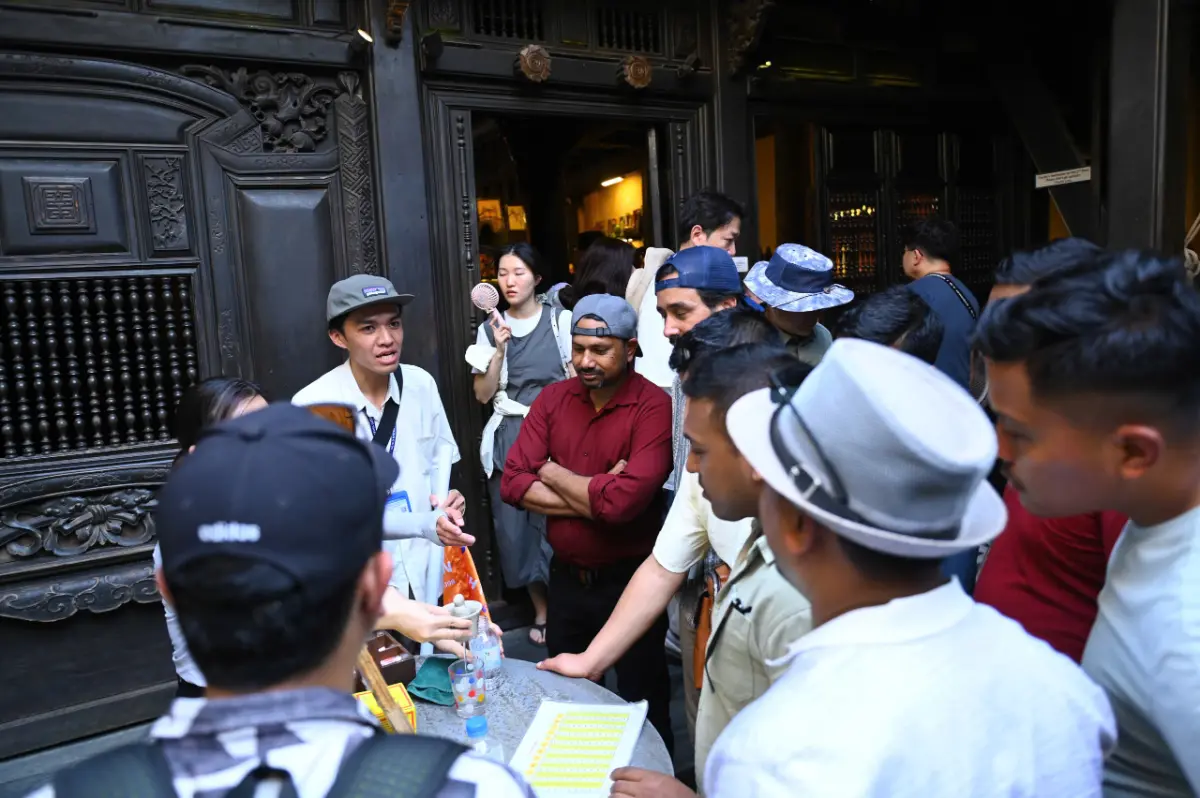
Our Real Moment Walking Hoi An With A Local captures that tone from a guest perspective: small group, orange flag, ancient house interiors, and a proper bowl of Cao Lầu after the walk — experience first, brochure second.
Quieter routes when the Old Town fills up
Cruise days and lantern festivals compress crowds onto the same photogenic corners. Locals still use back lanes to reach home, school, and workshop — guides route through those when possible so you see Hoi An as a town, not only a stage set.
That pacing matters for photographers, families with strollers on uneven stones, and anyone who dislikes shoulder-to-shoulder corridors. Walking etiquette helps too, but a guide chooses the hour and alley.
Food tips and practical orientation
Guides answer the unglamorous questions that shape a good trip: where ATM cash is reliable, how heritage tickets work today, whether sandals are foolish on wet cobbles, which café has shade at noon.
Food recommendations are especially valuable in Hoi An, where dishes such as Cao Lầu are tied to this town specifically. The evening street food walking tour goes further — tastings with stories — but even the Old Town walk usually ends with honest suggestions for dinner.
Respect in temples, homes, and residential lanes
Heritage towns are lived-in. Guides remind guests when to remove shoes, when photography is sensitive, and when a yellow wall is someone's kitchen window rather than a backdrop. That protects both visitors and residents.
If you plan extensive independent walking afterward, combine a guided morning with our etiquette story so your later solo routes stay considerate.
Why we keep the first walk free to join
Committing a large fixed fee before you know a guide's style is a gamble. Free-to-join walks let you test the relationship — then tip voluntarily if the guide earned your trust.
That aligns with how we hire and train: reputation from good walks, not pressure at the booking page. See how free walking tours work for the full sequence.
When you might skip a guide
Return visitors who already know the Old Town may prefer solo repeats of favourite lanes. Travellers with rigid non-walking mobility needs should message us before booking — cobblestones and steps are part of the heritage fabric.
If you only want a rapid photo stop at one bridge, a guide may be more than you need. If you want orientation for a multi-day stay, a guide usually pays back in time saved and mistakes avoided.
Conclusion
Exploring Hoi An with a local guide means context, quieter routing, respectful habits, and practical advice you reuse all week — not a parade of facts you forget by dinner.
Our walks are free to join with optional tips at the end. Start with the Old Town tour or message us on WhatsApp — then keep wandering on your own with confidence.
Frequently asked questions
- Can I explore Hoi An without a guide?
- Yes — many visitors do. A guided walk accelerates learning on day one; solo wandering is ideal once you have bearings and ticket rules clear.
- Will the guide only show tourist traps?
- Our routes include major landmarks because they matter — but also markets, back lanes, and workshops when open. We do not run commission shopping stops mid-tour.
- Is a food tour better than the Old Town tour?
- Different goals. Old Town prioritises heritage and orientation; evening food prioritises flavour after dark. Many guests do one, then the other on separate days.
- Do guides work for tips only?
- On public free walking tours, voluntary tips are the primary compensation for that walk. There is no separate upfront ticket paying the guide.