
Real Moments From Hoi An
Japanese Covered Bridge Hoi An: A Closer Look at the Icon of the Ancient Town
A local photo walk around Hoi An's Japanese Covered Bridge — pink walls, guardian statues, wooden corridor and canal life around the Ancient Town's most famous landmark.
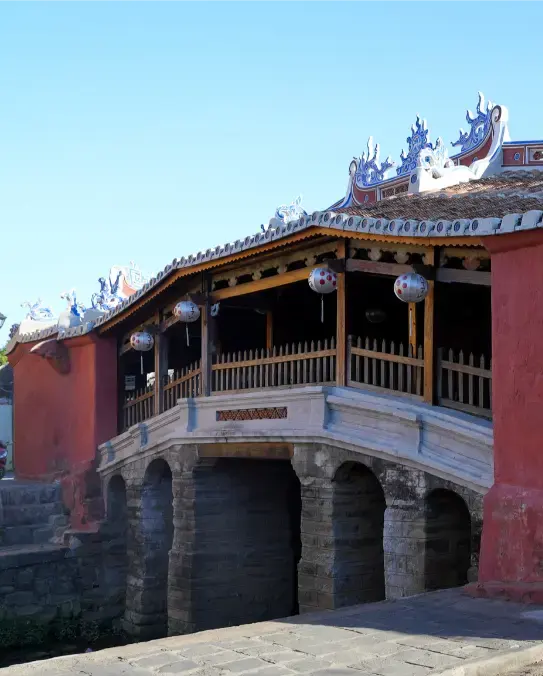
The First Impression
Few landmarks say "Hoi An" as instantly as the Japanese Covered Bridge — known locally as Chùa Cầu.
For most travellers it is the first photo they take in Hoi An Ancient Town, and one of the last memories they carry home.
Approaching from the southwest, the bridge stands out with its soft pink walls, curved tiled roof and elegant wooden structure. Built by the Japanese trading community in the early 17th century, it has connected Hoi An's neighbourhoods for more than 400 years and today anchors the city's UNESCO World Heritage core.
Walking Through History
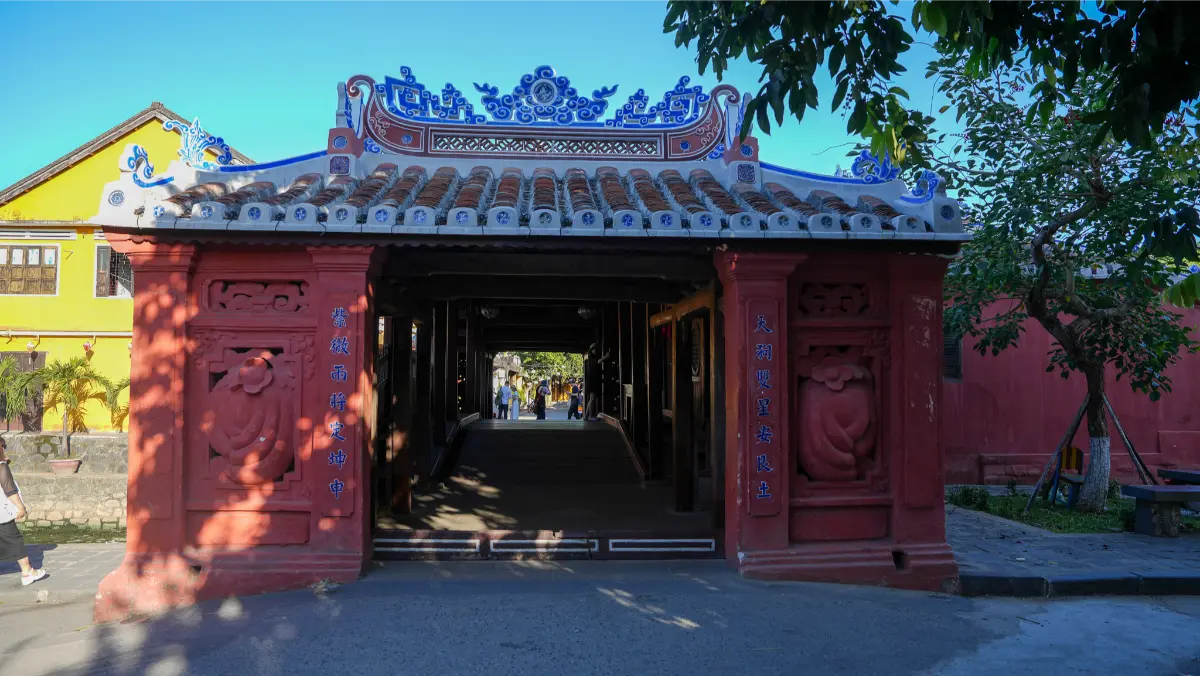
Standing at the main entrance, you start to notice the details: balanced proportions, hand-cut beams, small mythical creatures riding the roof ridge.
Every tile and carving tells part of Hoi An's story as one of Asia's great trading ports — a place where Japanese, Chinese and Vietnamese merchants lived, prayed and did business side by side.
It is also why our free walking tour of Hoi An Ancient Town always slows down here, instead of just snapping a photo and moving on.
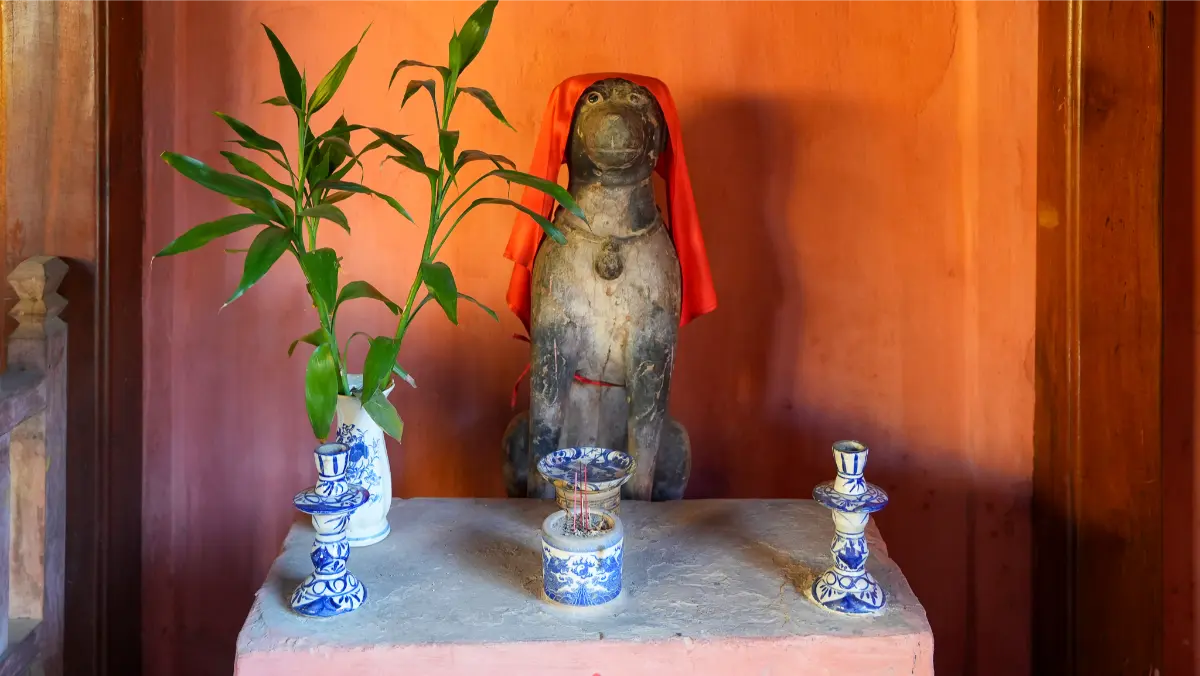
The Guardian Of The Bridge
Inside, a small altar honours a stone guardian dog and monkey — the bridge's silent protectors.
Local legend says construction began in the Year of the Monkey and ended in the Year of the Dog, so the statues were placed here to bless every step across the bridge.
Most visitors walk straight past. Our local guides always stop, because this tiny shrine is one of the most photographed and most misunderstood details in the whole Ancient Town.
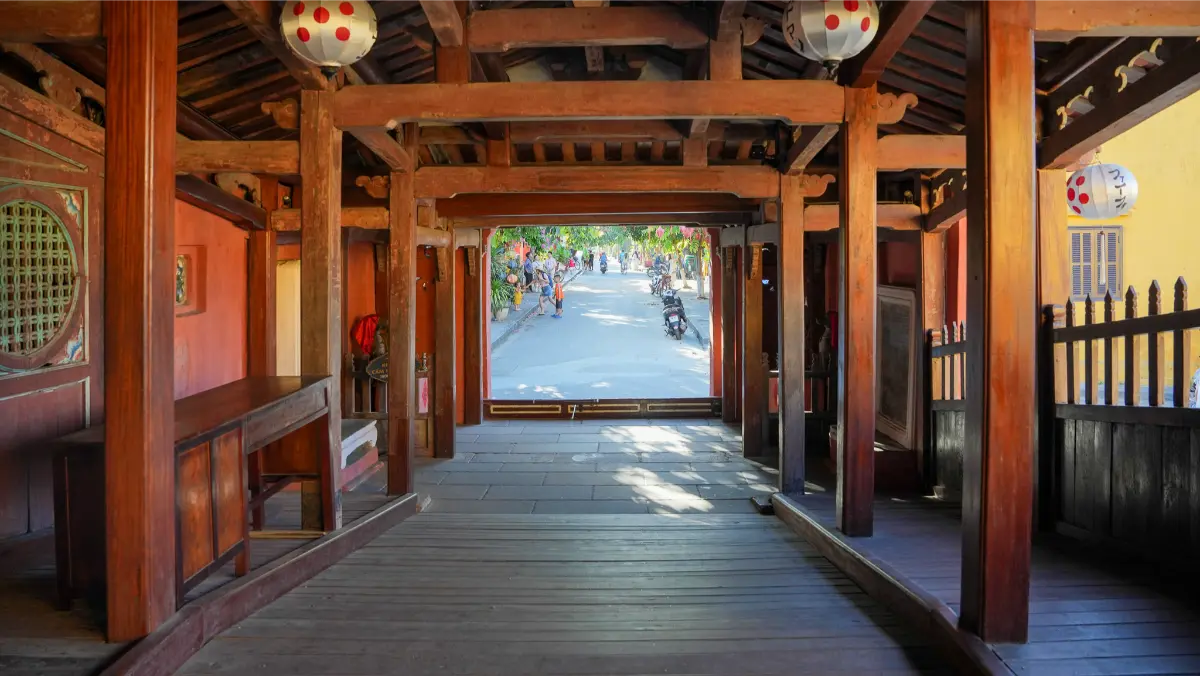
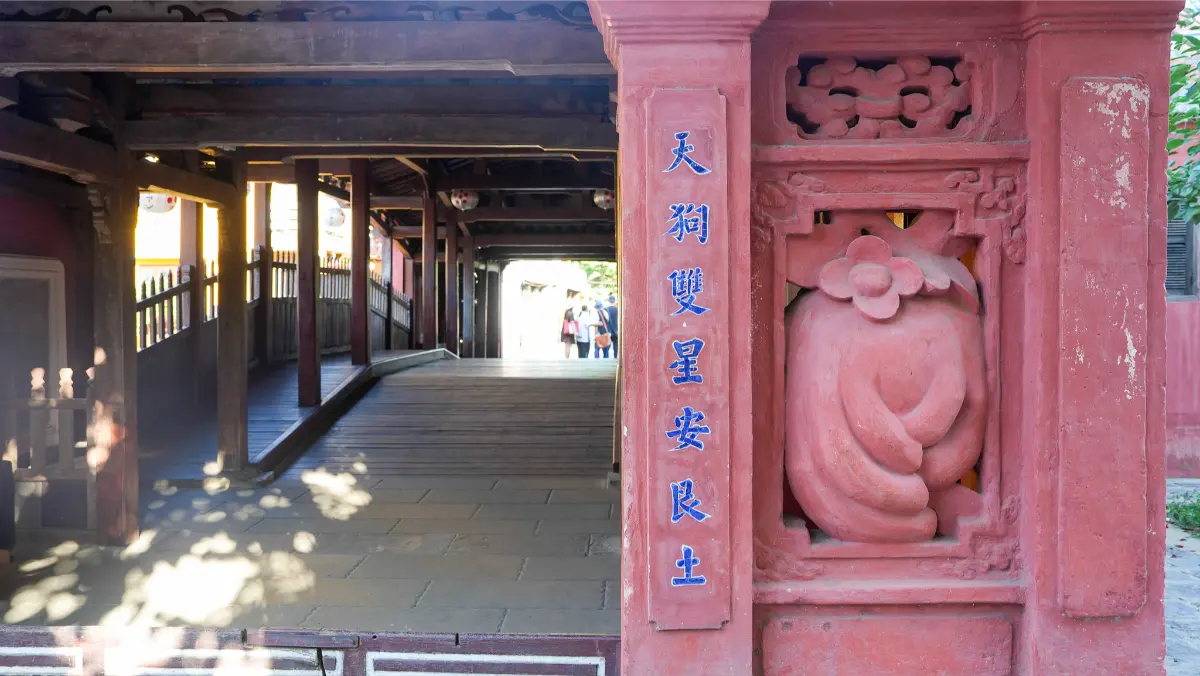
Inside The Wooden Corridor
Step through the doorway and the noise of the street drops away.
Soft light filters through the roof, silk lanterns sway above dark timber floors, and the whole corridor feels quieter than it should — almost like a small temple.
That is the point. For centuries the bridge was not just a crossing but a place of prayer, meetings and shelter from Hoi An's tropical rain.
Looking Beyond The Bridge
From inside, every doorway frames another scene of Hoi An.
Cyclists drift past, an elderly woman carries baskets of flowers, tourists pause to read the Chinese inscriptions carved into the red pillars.
It is a reminder that Chùa Cầu is not a museum piece — it is still part of daily life in the Ancient Town.
Another Perspective
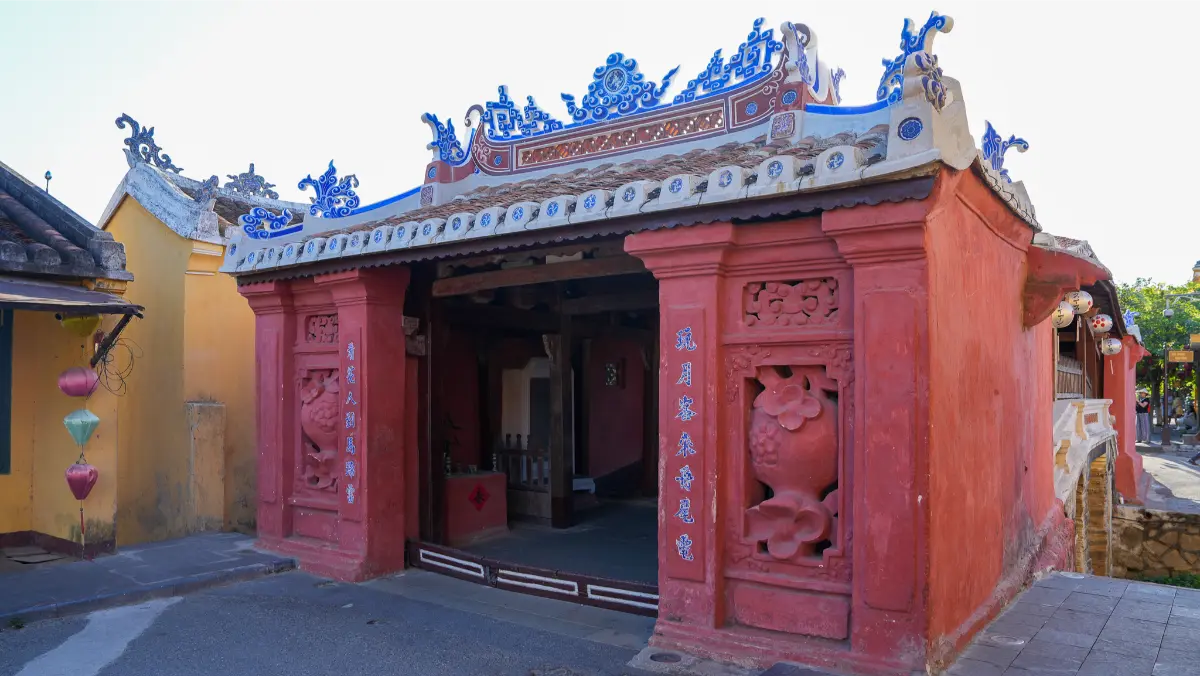
Cross to the opposite side and the bridge changes character again.
The east entrance is quieter, framed by pastel silk lanterns and yellow walls, with different carvings from those on the main façade.
Every side of Chùa Cầu tells a slightly different story — a small reward for anyone willing to step away from the busiest viewpoint.
The Surrounding Streets
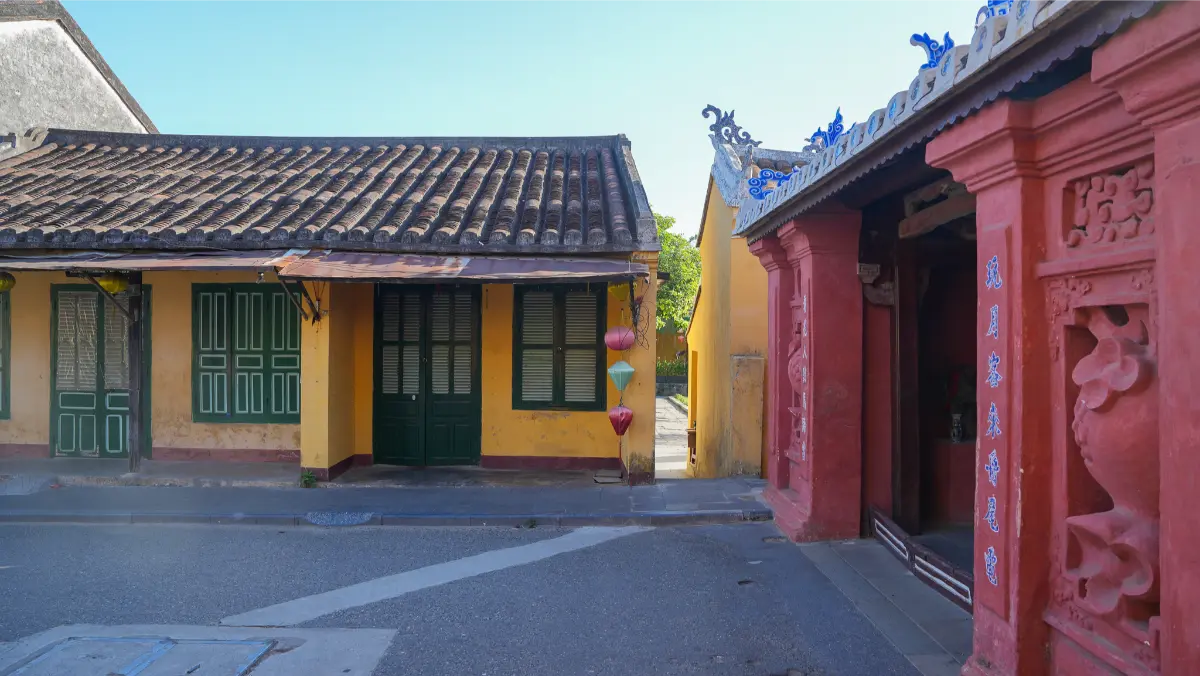
The bridge is only one piece of a much bigger historic neighbourhood.
Around it, ochre-yellow merchant houses, quiet alleys, tailor shops and family altars form the backdrop that makes Hoi An one of Southeast Asia's best-preserved ancient towns.
Sometimes the strongest photograph is not the bridge itself, but the life happening two metres away.
A View Across The Water
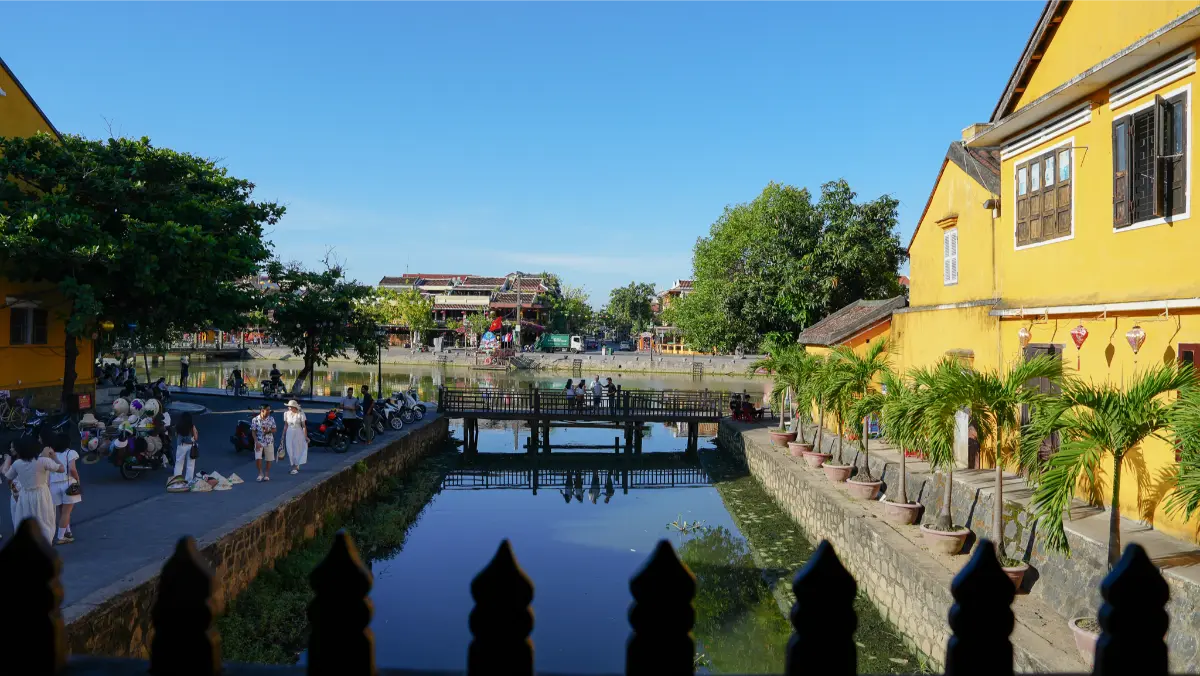
Look out from the bridge and Hoi An slows right down.
The Thu Bồn tributary reflects yellow façades and palm trees; women in conical hats sell fruit along the promenade; motorbikes weave gently past. In late afternoon the light turns gold and the whole scene feels like a painting.
Come back at night for the full lantern-lit Old Town experience — no two visits ever look the same.
Planning Your Visit
Where: western end of Nguyễn Thị Minh Khai, Hoi An Ancient Town, Quảng Nam.
Best time: early morning (6–8 AM) for soft light and empty photos, or just after sunset when the lanterns come on. Midday is hot, crowded and harsh for photography.
Ticket: the bridge is inside the Hoi An Ancient Town heritage zone. A single Ancient Town ticket covers Chùa Cầu plus several other heritage sites — keep your stub.
Dress: shoulders and knees covered when stepping onto the small altar inside; the interior is treated as a place of worship.
Pair it with: a slow loop through the wider Ancient Town, a coffee on the riverside, and a bowl of cao lầu — Hoi An's signature noodle dish — for lunch.
Join the walk
Walk Chùa Cầu with a local guide
Join a small-group Free Walking Tour of Hoi An Ancient Town — Japanese Covered Bridge, assembly halls, ancient houses and the stories most visitors never hear. Free to join, tip what you feel.