
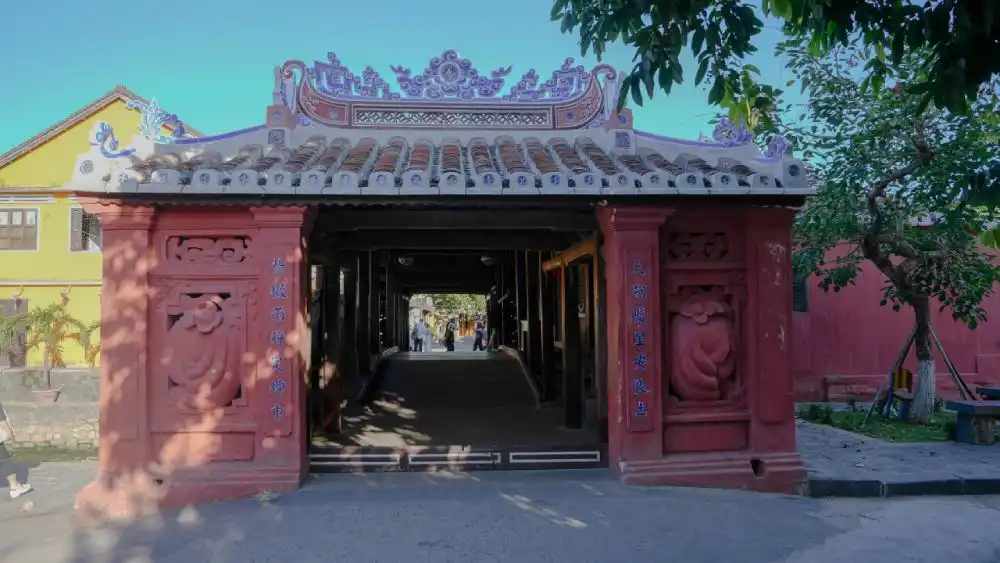
The Landmark That Defines Hoi An
Ask anyone who has visited Hoi An to name the town’s most memorable landmark, and the answer is almost always the same—the Japanese Covered Bridge.
Gracefully spanning a narrow canal in the heart of Hoi An Ancient Town, this centuries-old bridge has become far more than a beautiful place to take photographs. It represents the history of one of Southeast Asia’s greatest trading ports, the meeting of different cultures, and the spirit that continues to make Hoi An one of Vietnam’s most beloved destinations.
For many visitors, the bridge is the first stop on their journey through the UNESCO World Heritage Site. Yet those who spend only a few minutes here often miss what makes it truly special. Behind its weathered timber, curved tiled roof, and faded pink walls lies a remarkable story of international trade, local beliefs, remarkable craftsmanship, and everyday life that has continued uninterrupted for more than four centuries.
Whether you’re planning your first visit or returning to discover more, the Japanese Covered Bridge offers the perfect introduction to the history and character of Hoi An.
If you’re looking to understand the stories behind the monuments rather than simply admire them, our Hoi An Old Town Walking Tour – Lanterns, Legends & Local Life takes you beyond the guidebooks, with passionate local guides who bring every corner of the Ancient Town to life.
A Bridge Built by a Global Community
Few travellers realise that Hoi An was once one of Asia’s most cosmopolitan ports.
During the 16th and 17th centuries, merchant ships from Japan, China, Portugal, the Netherlands and many other countries regularly arrived along the Thu Bon River. They traded silk, ceramics, tea, spices and precious goods, transforming Hoi An into an international commercial centre long before modern globalisation.
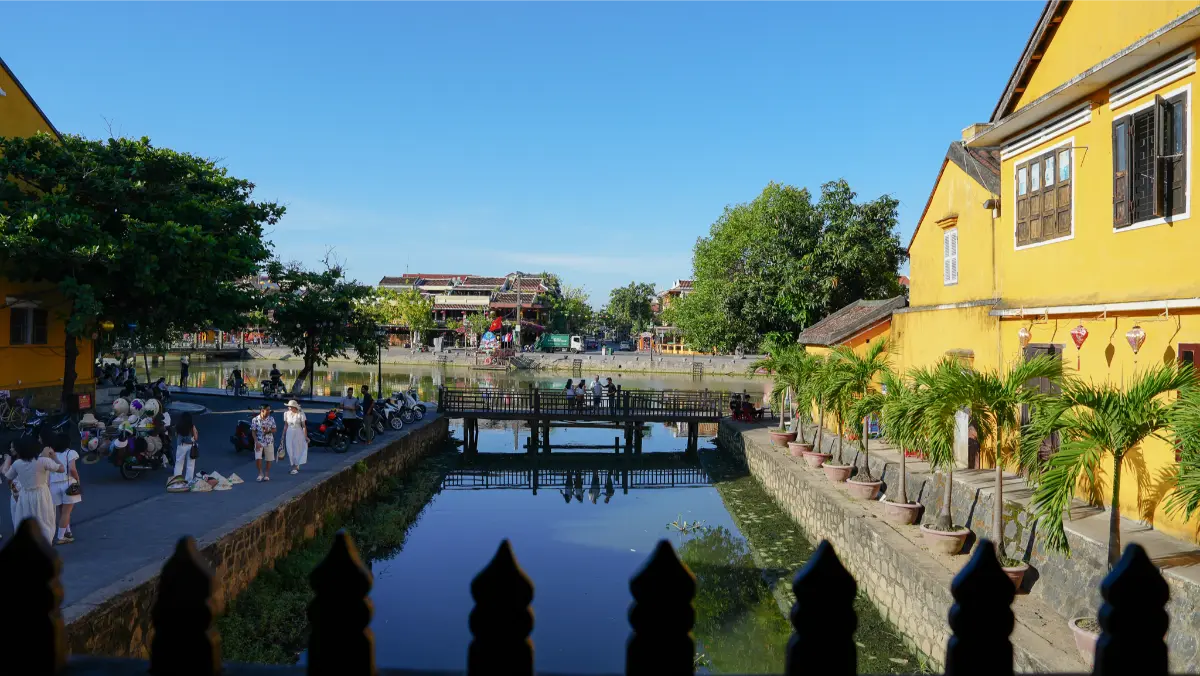
The Japanese community settled on one side of the canal, while Chinese merchants established neighbourhoods on the other. Around the early 1600s, the Japanese Covered Bridge was built to connect these communities, making it easier for merchants, craftsmen and local residents to move between the two districts.
More importantly, the bridge symbolised cooperation between different cultures. Instead of separating communities, it brought them together—a legacy that still defines Hoi An today.
It is one of the reasons UNESCO recognised Hoi An Ancient Town as one of the world’s best-preserved historic trading ports.
Hidden Details That Most Visitors Walk Past
Most visitors photograph the bridge from the outside before continuing their walk through the Ancient Town.
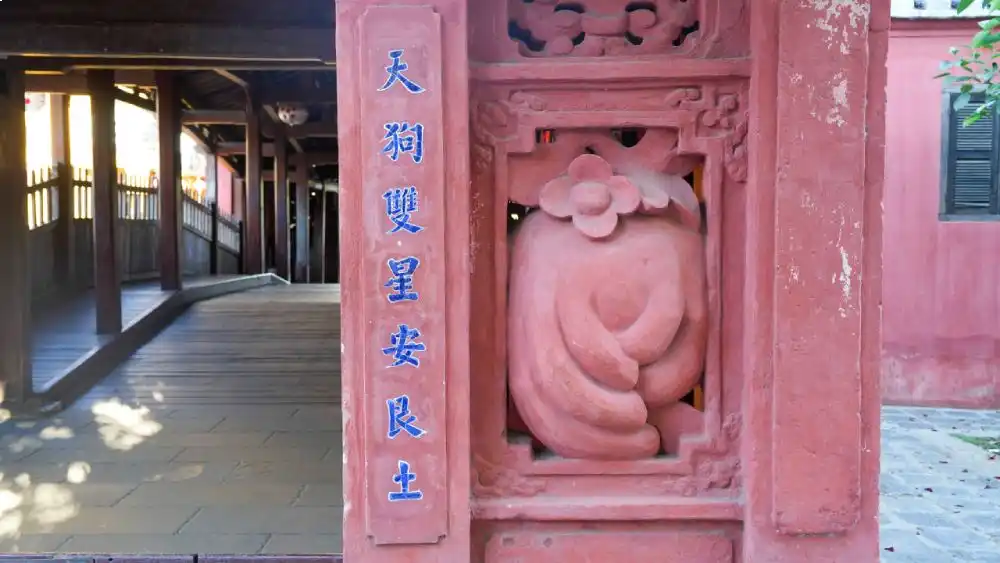
Few stop to examine the details carved into its entrance.
Look closely and you’ll notice elegant Chinese calligraphy, decorative reliefs, guardian sculptures and centuries-old timber joinery. These elements weren’t added simply for decoration. They express wishes for harmony, prosperity, protection and good fortune—values that were deeply important to the merchant communities who built and maintained the bridge.
Every restoration has carefully preserved these details, allowing visitors today to appreciate craftsmanship that has survived floods, typhoons and changing generations.
These are exactly the kinds of stories that are often overlooked when exploring independently but become fascinating when explained by a local guide.
More Than Beautiful Architecture
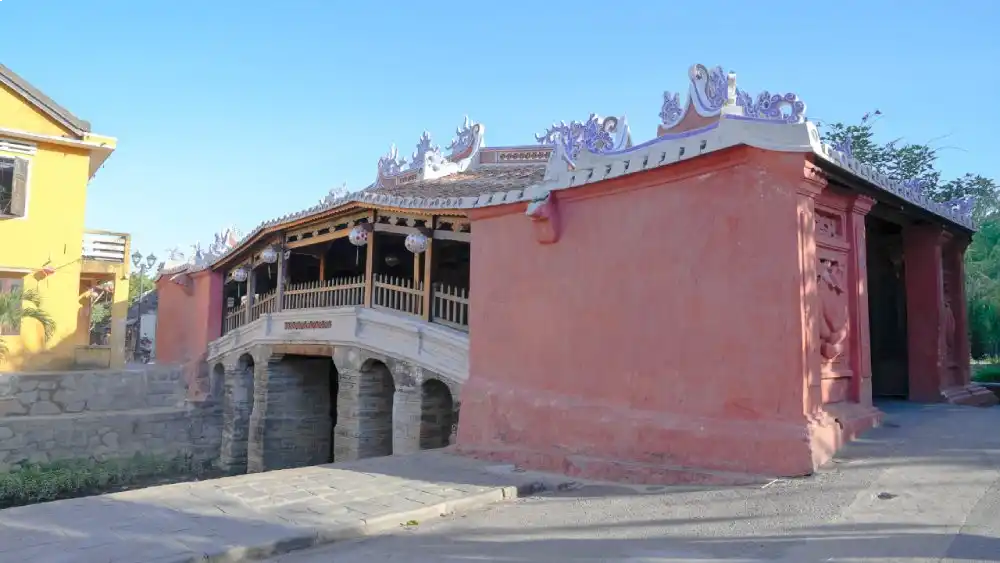
At first glance, the bridge appears unmistakably Japanese.
Look again, and you’ll notice influences from several cultures.
The elegant tiled roof reflects Japanese craftsmanship, while decorative carvings reveal Chinese artistic traditions. The structure itself was adapted using Vietnamese construction techniques that helped it survive Hoi An’s seasonal floods for hundreds of years.
This remarkable combination of architectural styles perfectly reflects Hoi An itself—a town where cultures met, traded and influenced one another for centuries.
The bridge is therefore much more than an architectural monument. It tells the story of how different communities built a shared future while preserving their individual identities.
Today, it remains one of the finest surviving examples of multicultural architecture anywhere in Vietnam.
Why Hoi An Is Best Explored on Foot
Many destinations are designed to be seen.
Hoi An is designed to be experienced.
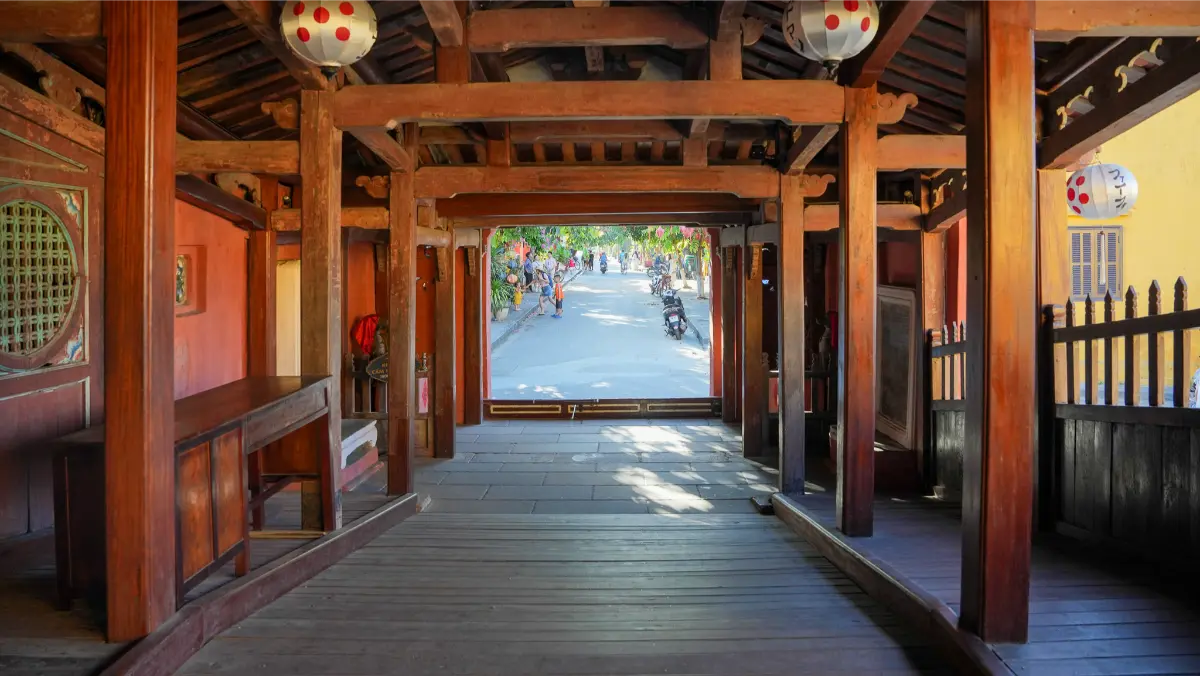
The Japanese Covered Bridge is only one chapter of a much larger story waiting to be discovered on foot. Within just a few minutes’ walk, you’ll encounter centuries-old merchant houses, Chinese assembly halls, peaceful temples, hidden courtyards, bustling local markets and narrow alleyways where daily life continues much as it has for generations.
Walking allows you to notice the details that disappear from a taxi window.
The scent of incense drifting from an ancient temple.
Lanterns swaying gently above quiet streets.
Local artisans carefully crafting handmade lanterns.
Elderly residents gathering outside traditional houses for morning conversation.
These moments rarely appear in travel brochures, yet they are what make Hoi An unforgettable.
If you would like to understand not only what you are seeing but why it matters, we invite you to join our Hoi An Old Town Walking Tour – Lanterns, Legends & Local Life.
Led by passionate local guides, this small-group experience explores the history, architecture, legends and daily life that shaped Hoi An into one of Southeast Asia’s best-preserved trading ports. Rather than simply stopping for photographs, you’ll discover the stories hidden behind each landmark, from the Japanese Covered Bridge and Tan Ky Ancient House to lively markets and peaceful backstreets.
For many travellers, it becomes the highlight of their time in Hoi An.
Continue Exploring Hoi An After Sunset
The Japanese Covered Bridge reveals one side of Hoi An’s story.
As evening falls, the town transforms once again.
Lanterns illuminate the Ancient Town, food stalls begin serving generations-old family recipes, and the aromas of Cao Lầu, Bánh Mì, White Rose Dumplings and sizzling Bánh Xèo fill the narrow streets.
One of the best ways to experience this atmosphere is by joining our Hoi An Evening Street Food Walking Tour.
Instead of searching for restaurants on your own, you’ll explore hidden local eateries with a knowledgeable guide, tasting authentic dishes while learning how Vietnamese, Chinese, Japanese and French influences helped shape Hoi An’s remarkable culinary heritage.
Together, our two walking experiences offer a complete introduction to the city.
During the day, discover the history, architecture and legends of Hoi An.
In the evening, experience its flavours, traditions and vibrant street life.
Discover the Real Hoi An with Local Guides
The Japanese Covered Bridge may be Hoi An’s most famous landmark, but it is only the beginning of the story.
Beyond its wooden beams lies a town built on centuries of cultural exchange, craftsmanship and community. Every street, every merchant house and every hidden courtyard adds another chapter to that story—one that is best experienced slowly, on foot, and through the eyes of people who call Hoi An home.
Whether you’re fascinated by history, architecture, local culture or Vietnamese cuisine, our local guides are passionate about helping you see beyond the landmarks and connect with the authentic character of this remarkable UNESCO World Heritage Site.
Ready to explore?
Join our Hoi An Old Town Walking Tour – Lanterns, Legends & Local Life and uncover the stories behind Hoi An’s most iconic places.
Continue your adventure with our Hoi An Evening Street Food Walking Tour, where history gives way to unforgettable flavours beneath the glow of Hoi An’s famous lanterns.
Because the best memories aren’t made by rushing from one attraction to another.
They’re made by slowing down, asking questions, and walking alongside someone who knows the stories worth telling.