
A Journey Back In Time
Some places impress you with grand monuments. Hoi An captures your heart with something much quieter.
Walk its narrow streets and silk lanterns sway above mustard-yellow walls, bicycles glide past centuries-old merchant houses, and the Thu Bồn River reflects the slow rhythm of daily life.
Located 30 km south of Da Nang, **Hoi An Ancient Town** has been a UNESCO World Heritage Site since 1999. Once one of Southeast Asia's busiest ports, it welcomed Japanese, Chinese and European traders — and their influence still shapes every street today.
Whether you love history, photography, food or slow travel, Hoi An offers something no other town in Vietnam can.
A Town Illuminated By Lanterns
Long before Instagram, lanterns were already part of daily life here.
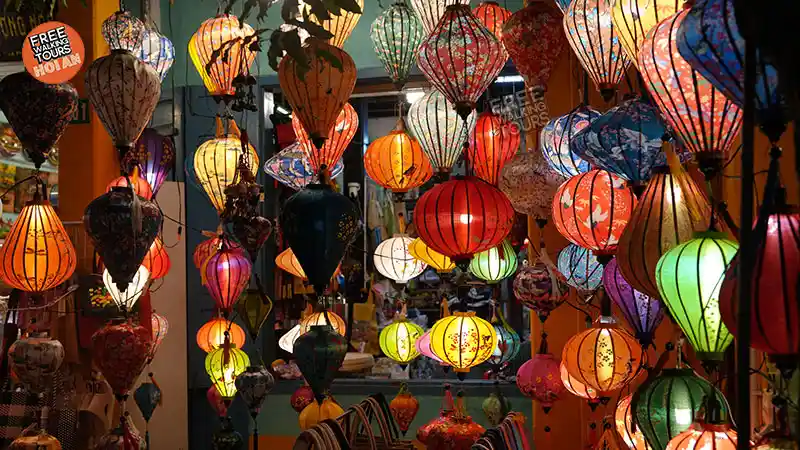
Introduced through Chinese trading communities, handcrafted silk lanterns became part of Hoi An's identity. Every evening thousands of them light streets, bridges and riverside cafés — the reason the town is on almost every Vietnam bucket list.
For local families, lanterns symbolise prosperity, happiness and hope. Many workshops still make each one by hand, using bamboo frames and coloured silk passed down through generations.
If you visit after sunset, take your time along the Hoài River. The reflections are why so many travellers call Hoi An one of Asia's most romantic towns.
Where Cultures Meet
Hoi An's greatest treasure isn't a single building — it is the way cultures blend across the whole town.
In the 16th and 17th centuries, Japanese, Chinese, Vietnamese and European merchants lived side by side, creating an architectural landscape that still survives today.
The Japanese Covered Bridge (Chùa Cầu) symbolises the friendship between Japanese and Chinese communities. Historic merchant houses combine Vietnamese wooden construction with Chinese decorative details.
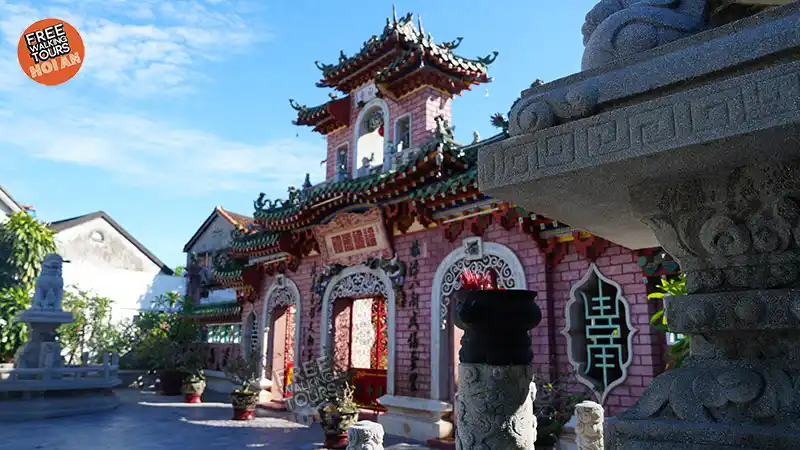
The **Fujian Assembly Hall (Hội quán Phúc Kiến)**, built by immigrants from Fujian Province, honours Thiên Hậu — the Goddess of the Sea — with dragon sculptures, ceramic mosaics and carved wooden interiors.
Every street reveals another chapter of Hoi An's international past.
Taste The Flavours That Define Hoi An
Exploring Hoi An isn't only about buildings — it is equally about the food.
The town's most famous dish is **cao lầu**: thick chewy noodles, marinated pork, crispy rice crackers, fresh herbs and a rich savoury broth. Local tradition says the noodles only taste right when made with water from the ancient **Ba Le Well**.
Beyond cao lầu, look for **white rose dumplings**, **bánh mì**, **bánh xèo** and the small family stalls hidden down side streets.
For a proper local map to all of this, see our Hoi An street food guide — or come with us on a real evening food walk.

Best Time To Visit Hoi An Ancient Town
Hoi An is beautiful year-round, but timing changes the experience.
**Early morning (6:00–8:00 AM):** soft light, cool air and empty streets before the tour buses.
**Late afternoon (from 4:30 PM):** warm golden light on yellow walls, followed by lanterns switching on at dusk.
**After sunset:** the Ancient Town transforms into a glowing riverside stage — worth staying for.
**Season:** February–April is dry and mild; October–November brings occasional flooding but also dramatic reflections in the flooded streets.
Photography Tips From Our Guides
Hoi An is one of the most photogenic towns in Southeast Asia. A few local tips:
Wear neutral colours — white, cream or soft earth tones complement the yellow walls.
Popular photo stops: the **Japanese Covered Bridge**, lantern alleys, the Thu Bồn waterfront, **Fujian Assembly Hall**, yellow houses along Trần Phú Street, and rooftop cafés overlooking the Ancient Town.
The strongest images usually aren't landmarks — slow down and photograph the small moments of daily life.
Explore Beyond The Landmarks
Many visitors spend only a few hours in Hoi An. Those who stay longer discover a very different town.
Hidden alleys lead to lantern workshops. Quiet temples offer breaks from busy streets. Riverside cafés become the best places to watch fishing boats drift along the Thu Bồn.
The best way to experience these places is on foot with someone who lives here — our local guides know the doorways most travellers walk past.
For a first-hand look at what these walks feel like, read Walking Hoi An With A Local.

Practical Info For Visiting
**Ancient Town ticket:** one heritage ticket covers Chùa Cầu, assembly halls, ancient houses and museums. Buy it at any official booth around the Old Town — keep the stub.
**Getting there:** 30–40 min taxi from Da Nang airport, or a short Grab from Da Nang / Hội An hotels.
**Getting around:** the Ancient Town is fully walkable. Motorbikes are restricted in the heritage core, especially in the evening.
**Dress:** modest cover for temples and altars (shoulders and knees).
**Money:** carry small VND notes — many vendors and cyclos don't accept cards.
Why Hoi An Continues To Inspire Travellers
Hoi An doesn't compete with modern cities — it offers something increasingly rare.
A place where history still feels alive. Where traditions continue naturally. Where meals are shared slowly, conversations last longer and every lantern-lit street pulls you a little further in.
Whether you come for the architecture, the food or simply the quiet, Hoi An has a way of making travellers slow down and rediscover what travel felt like before.