Japanese Covered Bridge: Discover the Soul of Hoi An Ancient Town on Foot
Quietly standing at the heart of Hoi An Ancient Town, the Japanese Covered Bridge is one of Vietnam’s most recognizable and meaningful landmarks. Known locally as Chùa Cầu, this historic bridge is not just a beautiful structure, but a place where culture, belief, and everyday life have met for more than four centuries.
For travelers from Europe and North America, the bridge often becomes the moment when Hoi An truly begins to make sense.
A Bridge Born from Global Trade and Cultural Exchange
The Japanese Covered Bridge was built in the early 17th century, during a time when Hoi An was a major international trading port. Japanese merchants lived and worked here alongside Chinese and Vietnamese communities, creating a rare blend of cultures in one small town.
The bridge was constructed to connect different neighborhoods and was believed to protect the town from floods and natural disasters. Over time, it became both a physical crossing and a spiritual guardian for the local community.
Despite centuries of storms, war, and restoration, the bridge still stands today as a powerful symbol of cultural harmony.
Architecture That Tells a Story
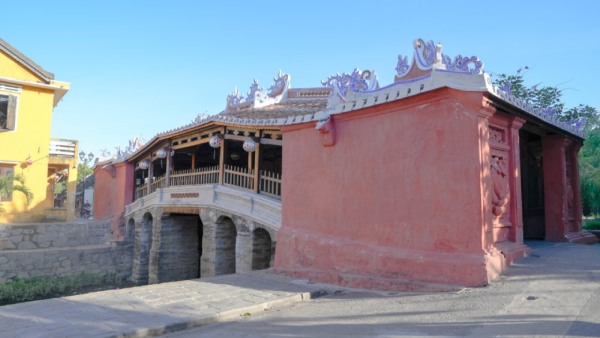
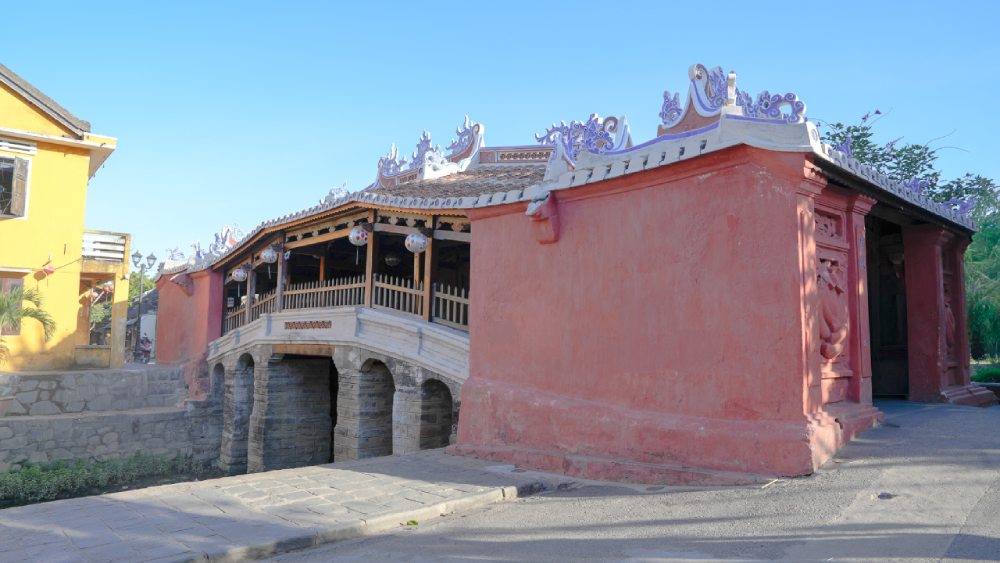
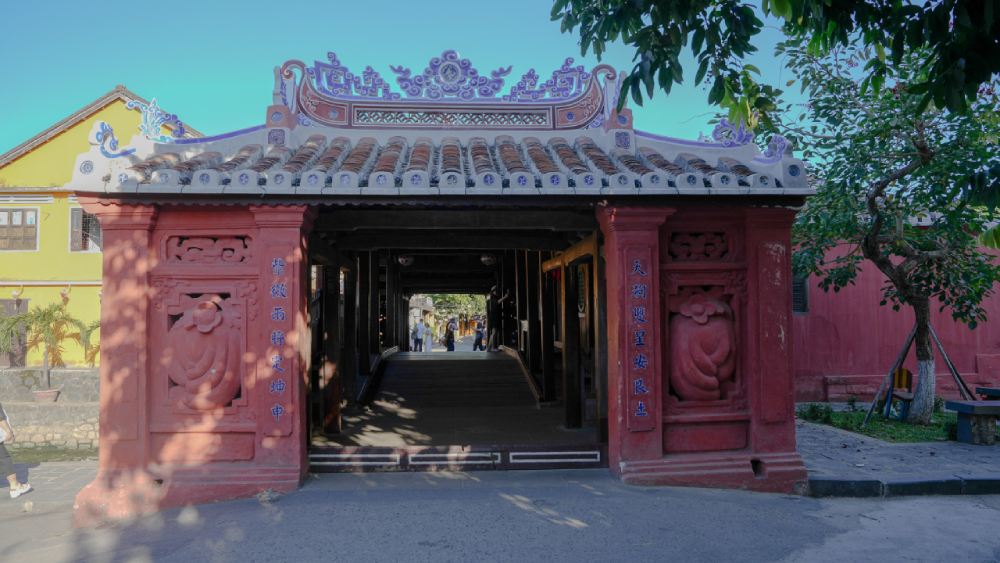
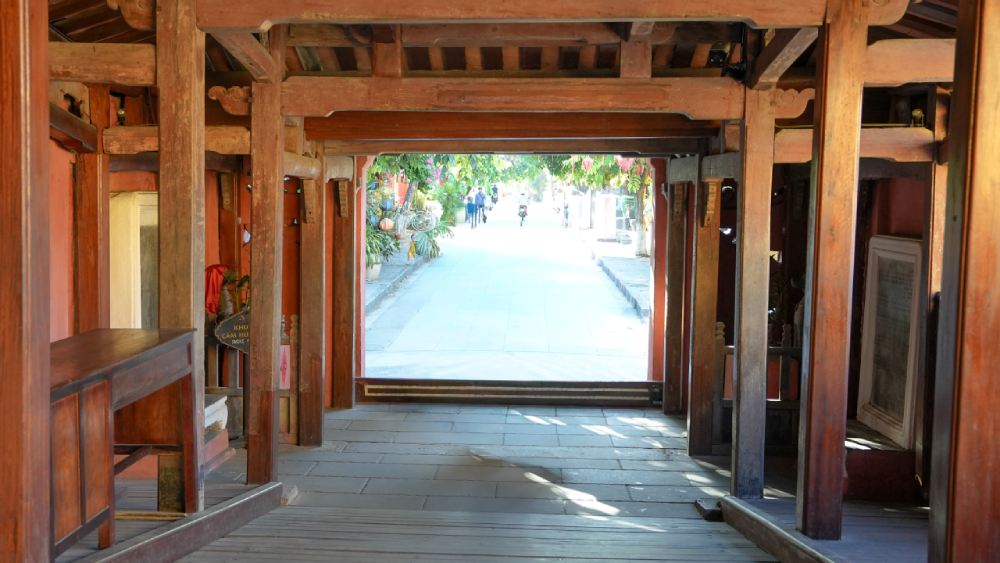
What makes the Japanese Covered Bridge so special is its unique design. Soft pink walls, a gently curved tiled roof, and finely crafted wooden beams reflect a mix of Japanese, Chinese, and Vietnamese influences.
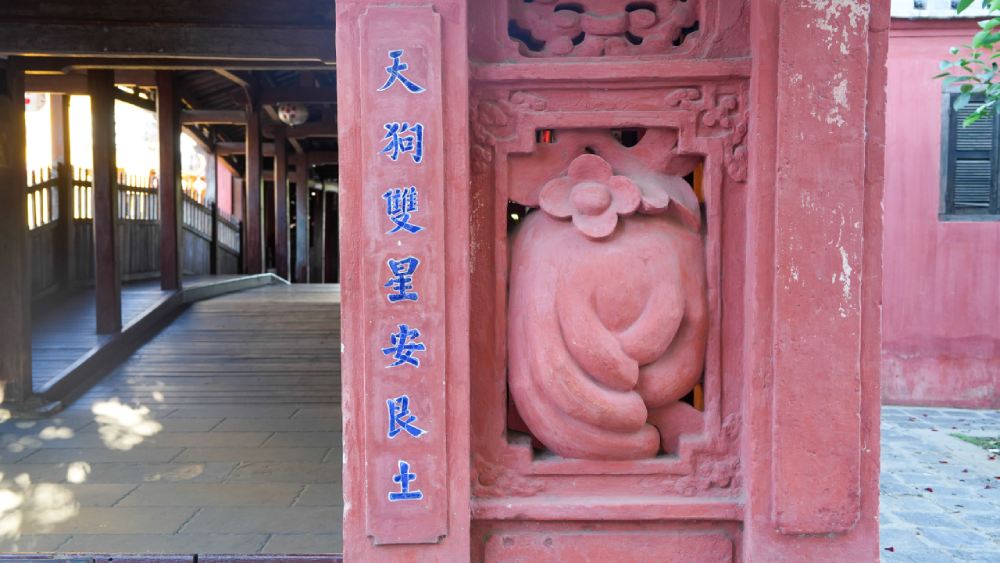
If you look closely at the stone pillars, you will notice ancient Chinese characters carved into the surface. These inscriptions express hopes for peace, balance, and protection. Many visitors walk past without noticing them, but once explained, these small details reveal how deeply spiritual this structure truly is.
Inside the Bridge: A Place of Quiet Reflection
Stepping inside the bridge feels like entering a different world. The noise of the street fades, replaced by calm shadows and filtered daylight. At the center, a small shrine honors a guardian deity believed to watch over Hoi An and its people.
This is not a museum display. Locals still come here to pause, reflect, and pay respect. For visitors, this moment often becomes one of the most unexpected and meaningful parts of their walk through the old town.
A Window into Everyday Life in Hoi An
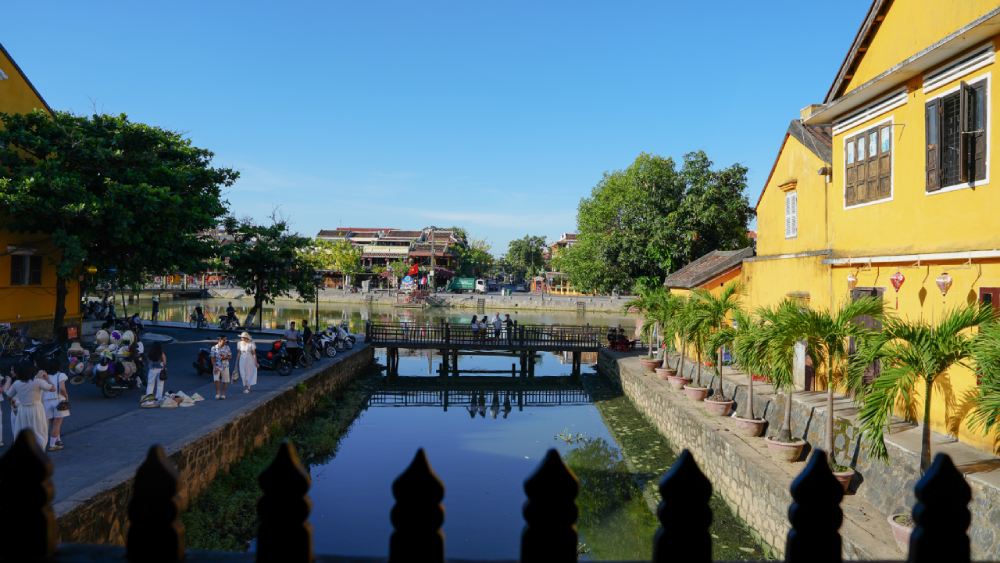
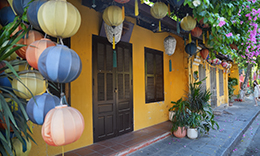
Looking out from the bridge, you see Hoi An as it truly is. Yellow houses, red lanterns, bicycles rolling past, and locals going about their day. The bridge frames this scene perfectly, reminding visitors that Hoi An is not frozen in time, but very much alive.
This balance between history and daily life is why Hoi An is best explored on foot, at a slow and thoughtful pace.
Why a Free Walking Tour Makes the Difference
While the Japanese Covered Bridge is easy to find, its deeper meaning is often missed without local insight. Joining a Free Walking Tour in Hoi An allows travelers to understand the stories, symbols, and cultural context that guidebooks rarely explain.
Through https://freewalkingtourshoian.com/, visitors can explore Hoi An Old Town with passionate local guides who share personal perspectives, historical background, and hidden details that transform sightseeing into genuine understanding. These free walking tours are especially popular with travelers from Europe and the United States who value authentic, experience based travel.
The Heart of Hoi An, Best Discovered on Foot
More than a landmark, the Japanese Covered Bridge represents the spirit of Hoi An itself. It speaks of openness, cultural exchange, and the importance of preserving heritage while embracing everyday life.
Whether you are visiting Vietnam for the first time or returning for a deeper experience, the Japanese Covered Bridge is best discovered slowly, on foot, and with a local guide who brings its stories to life.
Many travelers choose to explore Hoi An on foot with local guides, as free walking tours offer a deeper and more meaningful understanding of the old town.

 EN
EN
 English
 Pháp
Pháp
 Đức
Đức
 Tây Ban Nha
 Nga
Nga
 Tiếng Việt